20–40%
higher conversion from benefit-led vs feature-led copy
70%
more conversions on pages with a single CTA vs multiple
36%
click increase when headlines include specific numbers
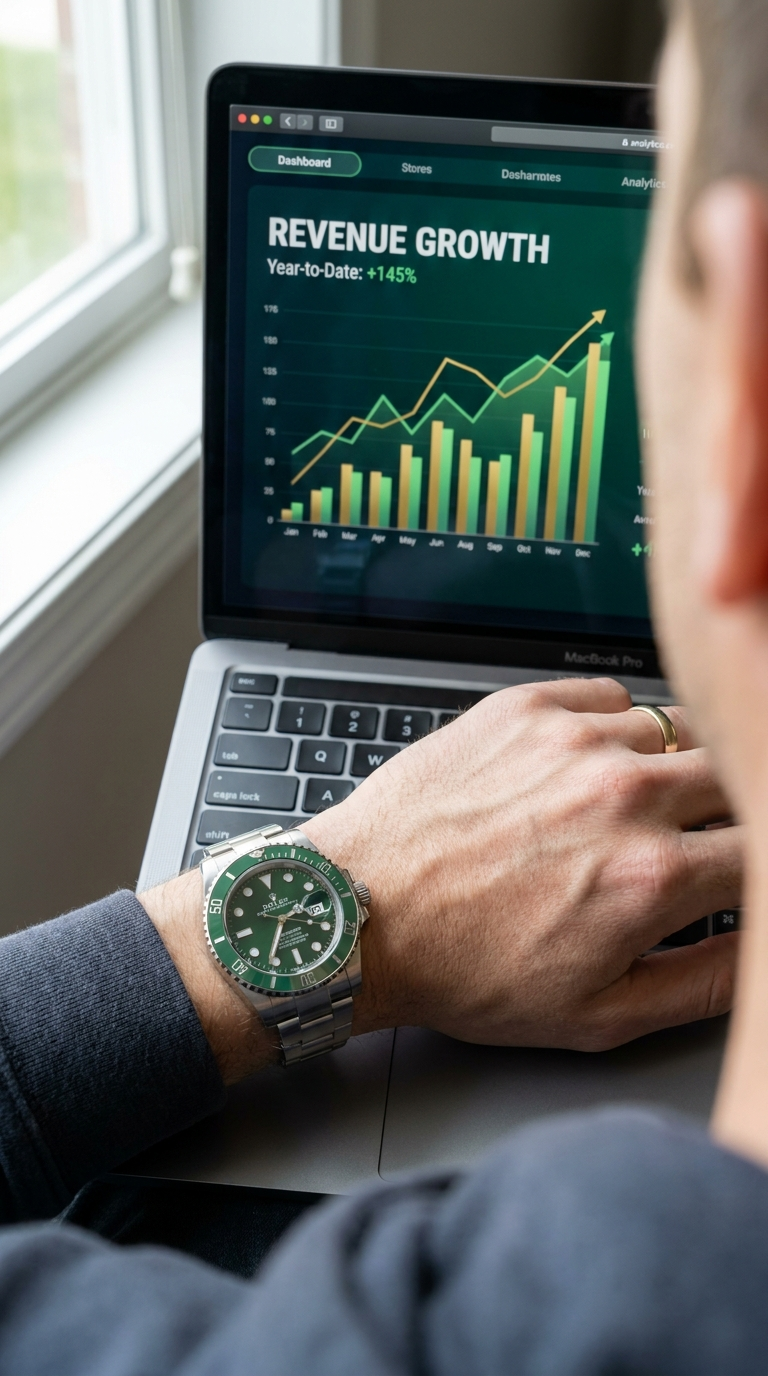
The real reason your ads aren't converting
I've audited hundreds of DTC brands. The pattern is almost always the same. The founder has a genuinely good product, a Klaviyo account with flows set up, a Meta ad account running spend, and a Shopify store that looks professional. Revenue is flat or growing slowly. They assume the problem is the targeting, the creative format, or the offer. It rarely is.
The problem is the copy. Specifically: the copy talks about the product when it should be talking about the reader. This single distinction is responsible for more lost revenue than any targeting error, attribution problem, or budget allocation mistake I've seen.
When I run split tests on underperforming brands, more than four in five winning variants come down to a copy or image change. Not a new funnel. Not a different bidding strategy. Better words. The leverage in DTC copywriting is enormous, and most operators haven't touched it.
Product Pages
Writing product page copy that closes
Your product page has one job: take a person who is already interested enough to click through and convert them into a buyer. The copy that does this well answers three questions in under five seconds. What is this? Who is it for? Why should I trust it? Most product pages answer none of these clearly above the fold.
Your headline is not your product name
The title of your product page should describe what the product does for the customer, not what it is. 'Magnesium Glycinate 400mg Capsules' is a product name. 'Fall asleep faster and wake up without the fog' is a headline. The product name can live below the headline in smaller type. Your H1 should contain the transformation your customer is paying for, written in the language they use to describe the problem. Pull that language from your reviews.
Lead with the benefit, follow with the feature
Every product claim should follow this structure: benefit first, feature second. 'Wake up feeling genuinely rested, because our formula uses magnesium glycinate, the most bioavailable form of magnesium, which crosses the blood-brain barrier without the digestive issues of cheaper alternatives.' The benefit leads. The feature justifies it. When you reverse this order, feature-first, the customer has to do the mental work of translating the feature into something they care about. Most will not bother. Benefit-led copy converts 20 to 40 percent better across every category I have tested it in.
Put proof above the fold
Social proof should appear before the add-to-cart button, not after it. A star rating summary, a short pull quote from a customer, or a 'trusted by X people' line placed directly under the headline reduces purchase anxiety before the customer has had to scroll. One brand I worked with moved their aggregate review score from the bottom of the page to the hero section and saw a 22 percent uplift in add-to-cart rate within two weeks. The copy hadn't changed. The position of proof had.
Answer the objection before it forms
Every product has two or three objections that stop most buyers from converting. Write them down. Then answer them in the product description before the customer has the chance to raise them mentally. 'You might be wondering whether this works if you've already tried X.' Name the doubt. Resolve it with specificity. Customers who have their objections answered in copy convert at significantly higher rates than those who are left to resolve them alone.
Email Copy
Writing Klaviyo emails that get opened, read, and clicked
Email returns between 36 and 42 pounds for every pound spent, and drives an average of 27 percent of DTC revenue. The brands extracting that return are not spending more on email. They are writing better copy. The channel is the same. The words are the difference.
Write your subject line last
The subject line has one job: get the open. Write it after the email is finished, once you know exactly what's inside and what the one idea is. Use specificity over cleverness. '3 customers who switched from X found this' outperforms 'You won't believe this' every single time. Keep subject lines under 40 characters for mobile preview. Use the preview text as a second subject line, not a repetition of the first. Test question-based lines, number-led lines, and lines that open a curiosity gap. Even a 5 percentage point increase in open rate compounds dramatically across your list.
Open in the reader's world
The first line of your email should put the reader inside their own experience, not introduce your product. 'You've probably noticed...' or 'Three weeks before summer and...' opens in a place the reader already knows. The reader's attention is earned before the product is named. Most DTC email copy opens with 'Introducing...' or 'We're excited to share...' These openings signal that the brand is talking about itself. That is the fastest way to lose a reader who is already distracted.
One email, one idea, one link
Every email should deliver one idea. Not three product launches, not a roundup of five tips and a sale and a new blog post. One idea, executed well, with one primary link. Emails that carry a single clear message and a single call to action consistently outperform multi-idea emails in both click rate and revenue per send. If you have three things to say, send three emails. Each one will outperform a single email trying to do all three jobs at once.
Use customer language verbatim
Your best email copy is already written in your reviews and support inbox. Customers describe your product, their problem, and the transformation in language that is more direct and specific than anything your marketing team will produce. Pull exact phrases. 'I've tried everything for bloating and nothing worked until this' is better than anything you can write from scratch. When customers read their own language back to them in your emails, the copy feels like it was written specifically for them. That is the closest thing to a conversion cheat code that exists in email marketing.
Ad Copy
Writing ad hooks that stop the scroll
You have under two seconds on TikTok and under three seconds on Meta to stop a scroll. Everything your ad needs to communicate must begin in those first moments. The hook is not the opening line of a story. The hook is the entire argument compressed into one sentence, image, or visual action that makes a specific person stop and think: this is about me.
The three hooks that consistently outperform across every DTC category I test in: naming the problem the customer already has ('Still getting X even though you've tried Y?'), presenting a specific result ('6kg down in 8 weeks using this'), or challenging an assumption the customer holds ('You're washing your face wrong'). Each of these opens a loop in the reader's mind that the rest of the ad closes.
The ad copy formula
Multi-benefit ad copy, where you try to communicate three or four product claims in a single ad, consistently underperforms single-benefit copy. The temptation to show everything your product does is understandable. It is also one of the most reliable ways to kill your ROAS. Each additional claim you add dilutes the clarity of the first. Pick the one thing your product does better than anything else, or the one outcome your best customers mention most often, and build the entire ad around that.
UGC-style copy, written in the first person and referencing the customer's real experience rather than the brand's marketing language, outperforms polished brand copy by a factor of three to five across conversion rate, CPM, and ROAS. This is not an accident. People do not stop scrolling for advertising. They stop for content that looks and sounds like something a person they trust might have posted. Write your ad copy in that register.
The one principle that ties all three channels together
Across product pages, email, and ads, there is one principle that determines whether copy works. Copy converts when it opens in the reader's world, not the brand's world. The reader's world is their current problem, their current frustration, their current goal. The brand's world is the product, the ingredients, the certifications, the founding story.
The brand's world only becomes relevant once the reader trusts that you understand theirs. Every piece of copy you write should earn that trust first. Name the problem. Reflect the frustration. Describe the goal. Then, and only then, introduce what you've built to serve it.
The practical version of this: before you write anything, write one sentence that describes your ideal buyer's current reality. What do they feel when they wake up? What have they already tried? What do they want that they haven't been able to get? Every word of your copy should be calibrated to that person's experience. When it is, the product page reads like it was written about them. The email feels like it was sent to them specifically. The ad stops their scroll because it's talking about their life.
What this looks like in practice
I worked with a skincare brand spending 18,000 GBP per month on Meta. Their product page opened with a paragraph about how the brand was founded, followed by a list of ingredients. Their emails led with 'Exciting news from [Brand]'. Their ads used professional photography with a tagline about 'skin that glows from within'.
We spent two weeks mining their reviews. One phrase appeared across 47 different five-star reviews in various forms: 'I finally stopped breaking out without drying out my skin'. That became the new product page H1. The ad hook became 'Still breaking out even though you've tried every gentle formula?'. The welcome email opened with 'You probably know the feeling: the skincare routine that clears one thing and causes another.'
Ad spend stayed at 18,000 GBP per month. Ad conversion rate went from 1.8 percent to 2.9 percent in six weeks. Monthly revenue from paid channels went up by 61 percent. No new channels. No new products. No increase in budget. The same traffic, converting at a higher rate because the words finally matched what the reader was already thinking.
Inside the system
How we build this for brands
When we take a brand on, copy is always one of the first things we address, because it touches every channel simultaneously. We run a VOC mining process that pulls customer reviews, support conversations, and social comments at scale, then analyses them for recurring language patterns, objections, and outcome phrases. That becomes the raw material for a full copy rewrite across product pages, Klaviyo flows, and ad creative. The process takes days, not months, because we have built systems that do the language mining and analysis automatically.
The second piece is the ongoing copy testing system. A VOC engine monitors new reviews and support messages continuously, flagging new objections and customer language as they emerge. Email copy is A/B tested systematically at the subject line and body level, with winning variants fed back into the creative brief for ads. The result is a copy system that gets sharper over time rather than stale. Part of this runs live for portfolio brands today; the full system is what we deploy when we take a brand on.
Copy Audit
Find Out Where Your Copy Is Losing You Sales
I will review your product pages, email flows, and top ad creative and tell you exactly what the copy is costing you in conversion. No pitch deck, no generic feedback. Just the specific changes that will move the numbers.
Book Your Copy AuditFrequently asked questions
What is the most important copywriting principle for DTC product pages?
Lead with the outcome the customer wants, not the features your product has. Benefit-led copy converts 20 to 40 percent better than feature-led copy on product pages. Your above-the-fold section should answer three questions in under five seconds: what is this, who is it for, and why should I trust it?
How should I write subject lines for DTC email campaigns?
Write your subject line last, after the email is complete. Use specificity over cleverness. Keep it under 40 characters for mobile. Use the preview text as a second subject line. Test curiosity gaps, number-led lines, and question-based lines. Even a 5 percentage point increase in open rate compounds significantly across your list over time.
What makes DTC ad copy stop the scroll on TikTok and Meta?
The hook is everything. You have under two seconds to stop the scroll. The most effective hooks name the problem, present a specific result, or challenge an assumption. After the hook: one clear claim, one specific proof point, one direct call to action. Multi-benefit copy consistently underperforms single-benefit copy.
How do I use customer language in my DTC copy?
Read all of your reviews. Pull exact phrases customers use to describe their problem and the outcome they experienced. Use those phrases verbatim in headlines, product descriptions, and ad hooks. When customers read their own language back in your copy, it converts at a materially higher rate than language the brand invented.
What is the single biggest copywriting mistake DTC brands make?
Writing for the product instead of the reader. Copy that opens with 'We believe in...' or 'Our product uses...' signals that the brand is talking about itself. The best-converting DTC copy opens in the reader's world, names their problem or goal, then introduces the product as the solution. The reader must feel understood before they will trust your offer.
How many CTAs should a DTC product page or email have?
One primary call to action per page or email. Pages with a single CTA convert 70 percent more than pages with multiple CTAs. Choice creates friction. Every additional option the customer has to consider slows or stops the conversion. Make the primary action unmistakable and let everything else serve it.
About the author
Caner Veli built Liquiproof from zero to 3,000+ global retailers in under 6 years, then exited profitably. He now runs Purposeful Profits using a combination of operator strategy and AI-powered systems he has built and uses daily, having 10x'd monthly revenue in his own business in the last 90 days.